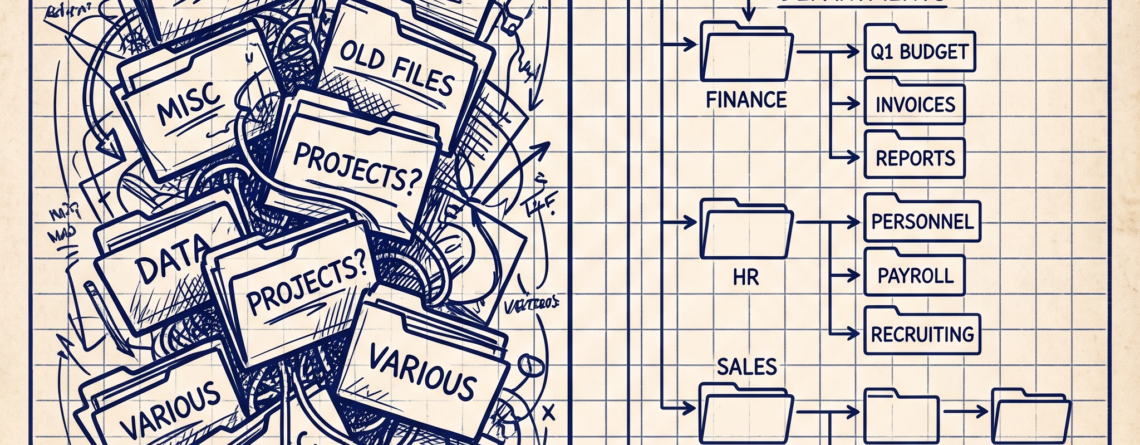
Let’s start with the foundation: how you handle information. If your team is
still saving files to a shared drive with names like “Final_version_FINAL_v2,”
you’re not just disorganized—you’re actively hindering your growth.
The Virginia Small Business Reality Check: With remote and hybrid
work becoming standard (especially in the DC metro area), your document management
system needs to work from Richmond, Charlottesville, and everywhere
in between. But more importantly, it needs to work when you’re not there to
explain where things are.
What Actually Works for Growing Businesses:
Cloud-Based Document Management with Structure:
- Implement a hierarchical folder system that makes sense to anyone
- Use consistent naming conventions (create a simple guide and enforce it)
- Set up version control so you never wonder which contract is current
- Create templates for common documents (proposals, contracts, reports)
Access Control That Scales: - Define who needs access to what (not everyone needs to see everything)
- Set up permission levels that protect sensitive information
- Create shared spaces for collaboration without compromising security
Real Example
A Fredericksburg consulting firm implemented a structured
document system that reduced time spent looking for files by 40%. More
importantly, when their largest client requested a rush project, they could
onboard two temporary contractors in hours, not days, because everything was
organized and accessible.